Have you ever had a snow storm and realized that you are out of salt for the driveway? Here are some Ice Melt alternatives that might get you by “in a pinch”. Explore some products that you may have around your home that can help melt the ice, or at least provide better traction until you’ve had time to go to the store. Also consider that you may have other salt products that can assist with melting ice.
Why Salt is the Most Common Deicer
Salt (sodium chloride) is one of the most common minerals used for deicing driveways and walkway, not to mention road surfaces. It works because it lowers the melting temperature of water (allowing it to more easily drain off of walkways and it also improves evaporation). The Rock Salt that is often sold to homeowners for deicing also provides traction on top of the ice due to the grain size of the salt.
The downside of salt is that it can be hard on your concrete and other walkway surfaces. As the salty water runs off of the surfaces, it can concentrate in your soil and make it harder for plants to grow. Typically if you use it only occasionally, the salt will be diluted by snow, rain, and irrigation and you may not notice a problem.
If you have areas that constantly need ice melting help, if you are concerned about the health of your plants, or if you have pets that have their paws ‘burned’ by walking over the salted area, you may want to consider keeping other deicing products around for the next snowstorm. For a full discussion about purpose made ice melt alternatives, please see Best DeIcer – Which Salt to Choose for the Job.
In the mean time, let’s get you out of the house without falling:
Ice Melt Alternatives Around the House
There are a great variety of products that you may have around the house that can help with slippery walkways. Most of these help because they provide traction, but a few will also help lower the melting temperature of the ice. The nice thing is that most of these ideas are eco-friendly and won’t hurt your concrete or plants.
Spent Coffee Grounds
Coffee grounds are such a useful item that I never toss mine down the disposal (unless I’m cleaning it!). Spent grounds are terrific for composting and can be applied directly to lawns and gardens to improve the soil and feed the earthworms (really!) The coffee grounds that have been used to make your cuppa can also be useful for icy patches on your walkways.
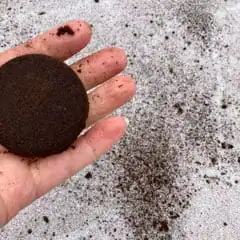
Coffee grounds provide some traction, especially if you grind them for drip coffee. Even espresso ground coffee can help on your walkways because the dark color and natural acids in the grounds can help melt the ice.
The bonus of using used coffee grounds is that they are totally bio-degradable and will naturally turn into compost in your yard and garden.
Playground Sand
If you’ve got kids and a playground area, you might have playground sand available. A small amount of playground sand on your walks provides traction and will just work it’s way into your lawn and garden soil without hurting it. Sometimes people who drive pickups carry sand around in the winter in bags or tubes to help with weight balance: that sand can also work on your driveway and sidewalks.
Sawdust
If you do wood working, you might have sawdust available to spread around. While it doesn’t lower the melting temperature of the ice, it does provide traction and it won’t damage concrete or nearby plants. Wood dust will also eventually bio-degrade and work it’s way into your soil, but not as quickly as coffee grounds.
Kitty Litter
The litter that is used for cat litter boxes can be useful for providing traction on your sidewalks. In particular, the very inexpensive (old fashioned) kind has a lot of clay in it. Kitty litter doesn’t lower the melting temperature of the ice, but the gritty texture is great for providing traction. It will also absorb some of the water, preventing it from re-freezing. Another upside is that kitty litter won’t damage concrete and it will just blend into the soil around plants.
Even if you don’t have a cat, keeping a small bag of cat litter has it’s benefits for home use. It’s ability to absorb moisture is great for messy cleanup tasks. If you have an older vehicle that tends to drip oil and other lubricants, you can spread some cat litter in the areas that get dripped on and help keep it off of the garage floor or driveway parking pad.
Wood Ash
If you’ve got a wood burning fireplace, the ash from you fire makes an excellent ice melt alternative. Before using wood ash on your walkways, you may want to put the ash through a coarse sieve to extract bigger chunks of unburned wood. Not only does wood ash improve traction and collect the sun’s warmth via the dark color, but wood ash contains potassium (potash), which moderately lowers the melting temperature of ice.
Be aware that wood ash is highly alkaline, which can negatively affect plants that prefer acidic soil or new seedlings. It is also not great for your skin, so consider using gloves when distributing wood ash on your icy patches.
Potting Soil
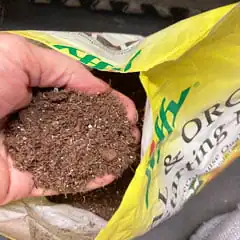
Many folks have bags of potting soil on hand – whether for garden projects or for filling flower pots. It really doesn’t matter if the soil was intended for indoor use or for outdoor purposes. The texture of the soil improves traction and the dark color helps collect the warmth of the sun near the surface of the ice. While the soil itself doesn’t really lower the melting temperature of ice, potting soil can be a decent choice for an ice melt alternative. It is also perfectly fine for your lawn and garden after the winter storms cease.
Here I am holding some seedling potting soil – but really any type of soil can be useful for traction on icy walkways.
Lawn Fertilizer
The dry, granular type of lawn fertilizer can be a useful ice melt alternative. Many homes have a partially used bag of this stuff sitting around in the garage from the previous summer. In my garage for example, I have a bag of Scott’s Turf Builder Lawn Food. The nitrogen that is in most grass fertilizer mixes, including Turf Builder help lower the melting temperature of water – similar to the action of salt (but not quite a much). The granular texture of the lawn food helps to improve traction while the ice is melting.
Since lawn fertilizers are beneficial for grass, as long as you use them in limited amounts, you may see especially happy grass lining your walkways and driveway in the spring.
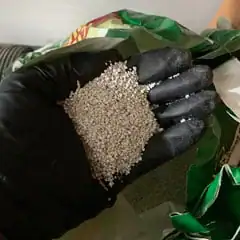
Lawn fertilizer is another example of a product that should be handled with some care – notice that I am using gloves to protect my hands while distributing it is recommended.
Other Salt as Ice Melt Alternatives
Even if you don’t have Rock Salt available for treating icy walkways, you might have other salt-based (Sodium Chloride) products around the house that will do “in a pinch”. Here is a quick review of typical salt that you can repurpose for ice melting:
Kosher Salt
Kosher salt is widely used by cooks and since it is typically coarsely ground, it is similar in size to Rock salt. Food grade salt is more expensive than driveway salt, of course, but not so much more that you couldn’t use it to get you through one winter storm.
Other kitchen salt, such as common table salt or pickling salt can lower the melting temperature of the ice, but won’t do much for traction because of the fine grain size.
Pool Salt
Pool salt makes a perfectly functional driveway deicer, particularly if you use the Solar or evaporated crystal version of pool salt. It may be a bit more expensive than Rock salt, but the sodium chloride content of the two types of salt are similar. For more about that subject, please see Breaking the Ice: How Pool Salt Can Melt Ice On Your Driveway.
Water Softener Salt
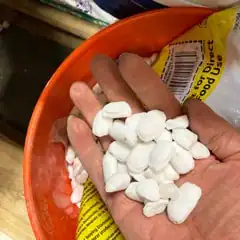
If you have a water softener to treat household hard water, the salt used in the brine tank has a similar amount of sodium chloride as Rock salt does. Water softener salt can be effective as an ice melt alternative, but the main issue is form factor.
The most popular form of water softener salt is the pellets – and they are large enough that they can be of limited usefulness for spreading on your walkways. For more about that subject, please visit Using Water Softener Salt To Melt Ice: A Comprehensive Guide.
Aquarium Salt
For years, I kept a saltwater aquarium, so I always had a supply of salt on hand. Once again, aquarium salt is a more expensive form of sodium chloride that also contains trace amounts of nutrients needed to keep saltwater fish, corals and invertebrates healthy and happy. The reality is that it is over 99% sodium chloride, so it will indeed act much like rock salt if you spread some on your walkways. Even people who keep Koi Ponds or tropical aquariums may have some of this type of salt on hand for treatment of their freshwater fish.
Epsom Salt
Epsom salt is Magnesium Sulfate, not Sodium Chloride – but people do often have it around the house, and it does lower the melting temperature of ice somewhat. Epsom salt can be somewhat helpful as long at the ground temperature is above 25 degrees Fahrenheit. You want to only use pure Epsom Salt though and not some type that has been mixed with essential oils or other bath related additions, because that can make your ice even more slippery!
Coarse grained Epsom salt can add some traction to your surfaces. This is another product that you want to use in moderation, as the magnesium salt can accumulate in your garden soil – which could be good or bad. For more about supplementing magnesium in your garden, a good article to start with is The Benefits Of Using Epsom Salt In Your Garden.
Ice Melt Alternatives of Questionable Utility
The internet abounds with suggestions for melting ice that are probably a waste of time or a waste of the products used. This is not exhaustive list, but some things to consider.
Vinegar
Most household vinegar, such as White Vinegar, is very diluted with water. Garden vinegar or Cleaning vinegar may produce better results on icy walkways, but the water in the vinegar can just freeze and add more ice to your walkways unless the ambient temperature is at least 28 degrees Fahrenheit. Also, vinegar is acidic, so in large quantities it can harm nearly vegetation. Internet suggestions for using the vinegar tend to rely on heating the vinegar – not much different than heating plain water and drizzling it on your sidewalks. Hmm.
I’ve also seen the suggestion to use Pickle Juice on walkways to melt salt. The brine used in pickling contains both vinegar and salt, so it may work better than vinegar alone. Dumping the brine out of your pickle jars though will cause the pickles to dry out and to spoil faster.
Beet Juice
Okay – who knows if this works? Do you commonly have a supply of beet juice around the house? I don’t. Also, beet juice is one of those things that is used as a coloring agent for food, due to the dark purple to reddish color. I can’t say that I want the sidewalk in front of my house to be dyed a dark color, even if it eventually may fade away.
Rubbing Alcohol + Dish Soap
Putting anything that has soap in it on my sidewalks seems counter-intuitive. Soap is slippery. Maybe the rubbing alcohol (isopropil alcohol) modifies it a bit, but neither of these ingredients are good for vegetation. I’m not going to test this one when there are so many better ice melt alternatives above.
Final Thoughts
I hope this list has given you some ideas for dealing with the icy spots on your walkways and driveway. Although it’s not much fun, there really is no substitute for doing your best to first remove the snow from your surfaces by shoveling, snow blowing or even sweeping (for light snowfalls). Good luck out there this winter!
Table of Contents
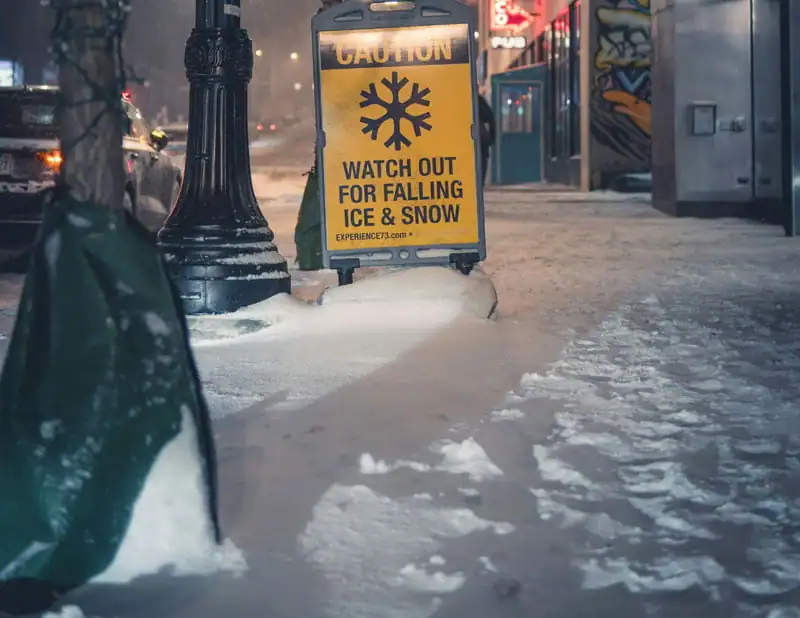
Photo of Icy Walkway warning sign by Tobias Reich.